← Product Duy's Oven 65L SMOKE-REDUCING CHARCOAL GRILL · INOX 304
Contact / Quote
Two charcoal boxes running lengthwise · Inox 304 · Air supply fan

Fat doesn't fall onto the charcoal,
so acrid smoke is greatly reduced.

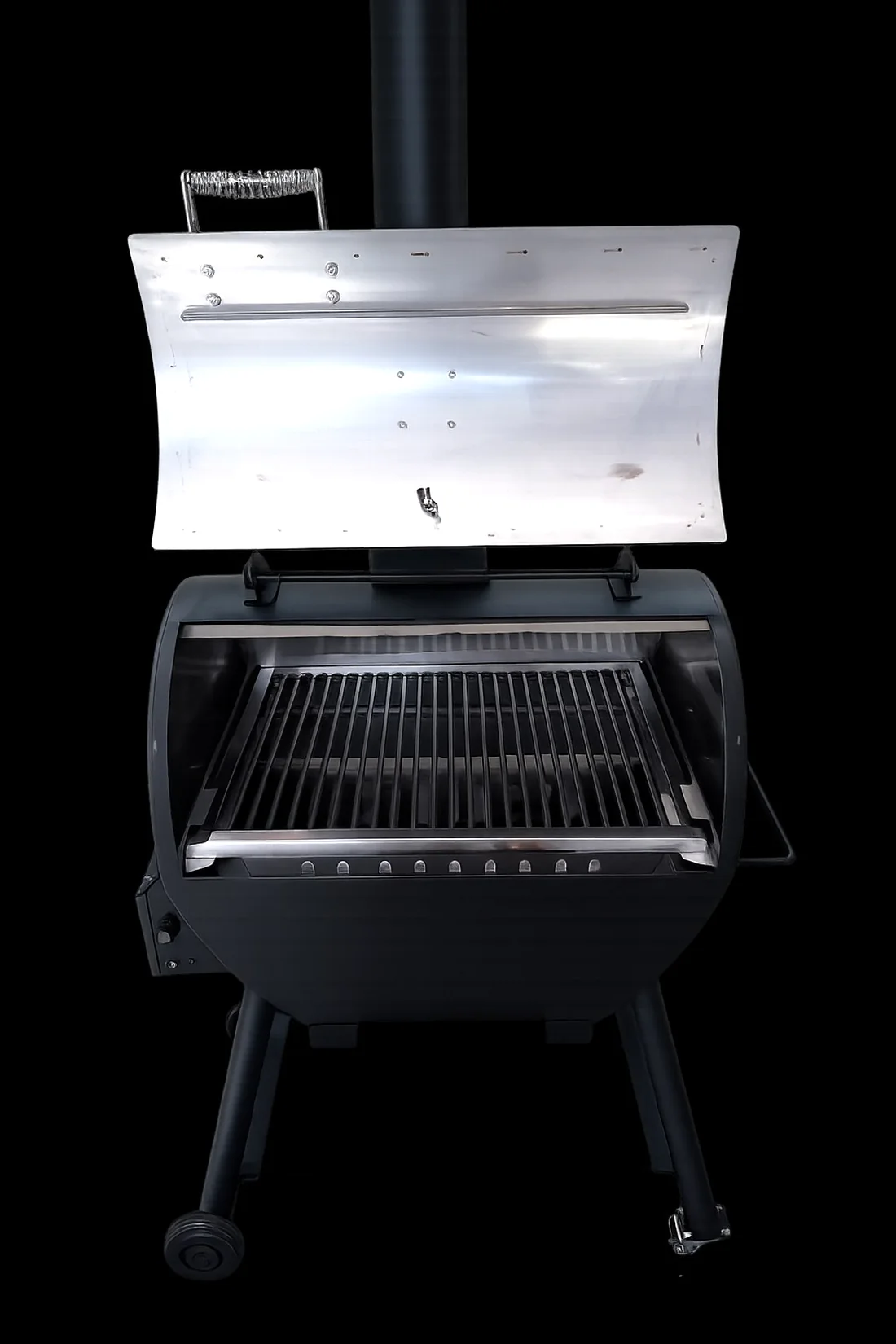
The same familiar 65L smoke-reducing charcoal grill — two charcoal boxes running lengthwise along the front and back edges, the food in the middle, fat draining into the center channel instead of touching the fire. This version switches to 304 stainless steel: resists fat, withstands washing, runs multiple sessions without worry of rust. Same principle, same size, same operation as the standard version.

Price · includes 10% VAT
17.600.000₫

Order this fireplace → Read the science section
FamilyBackyardSmall RestaurantRooftop
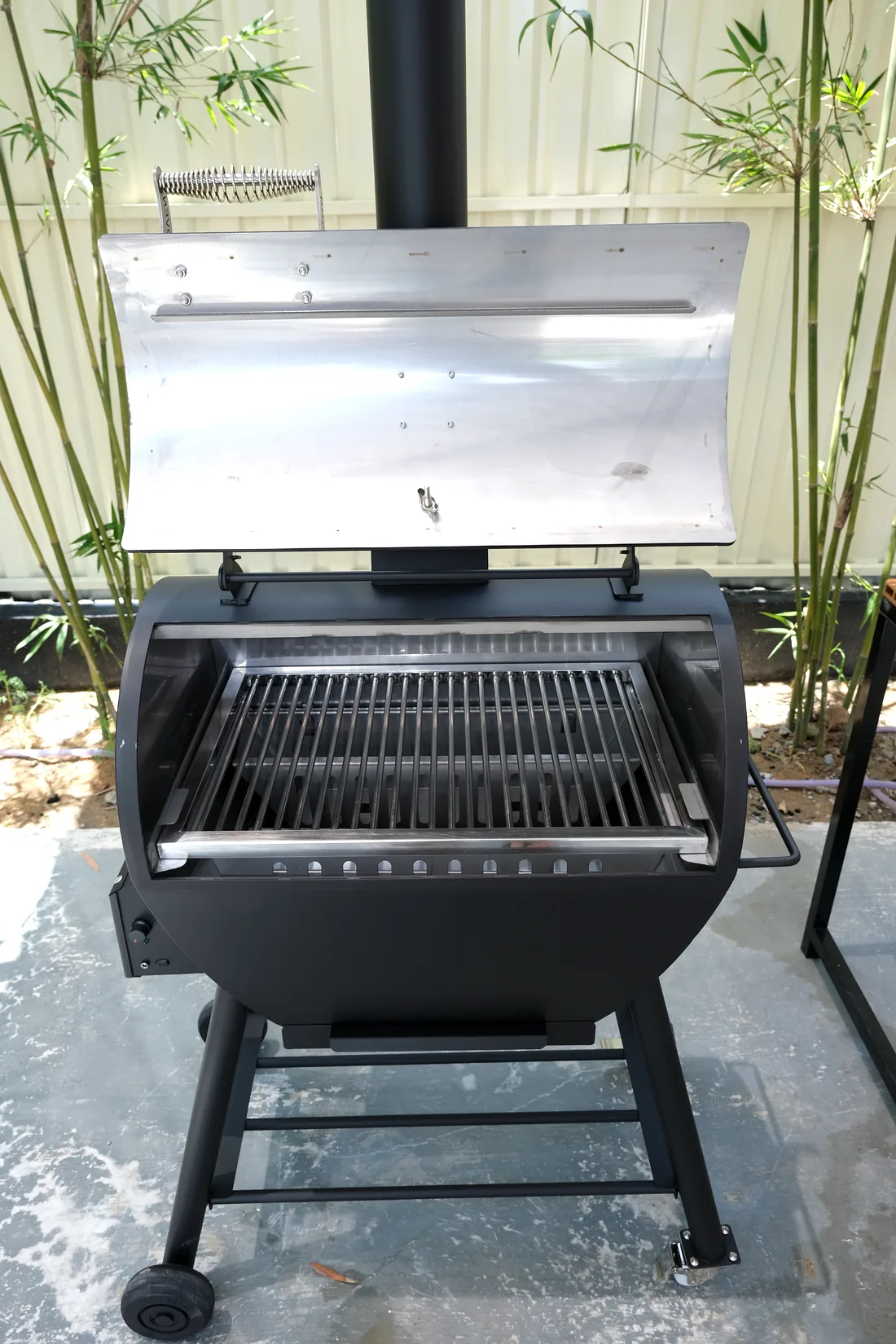
65L Smoke-Reducing Grill in 304 stainless steel with the lid open — stainless steel grate in the middle, shot on a black studio background
Construction

Six Elements That Make a Smoke-Reducing Grill

The internal layout is what matters, not the exterior shell. 304 stainless steel preserves that design.

🔥

Two Charcoal Channels Lengthwise

Charcoal sits in two long troughs running along the front and back edges of the grill, not underneath the food. Heat travels horizontally through the center via radiant heat from the front and back charcoal beds.

💧

Center Channel Catches Drippings

Food sits between the two charcoal channels, and fat drips straight down into the center tray. Fat never touches the hot charcoal, so it limits acrid smoke plumes and flare-ups.

🌀

Air-supply fan

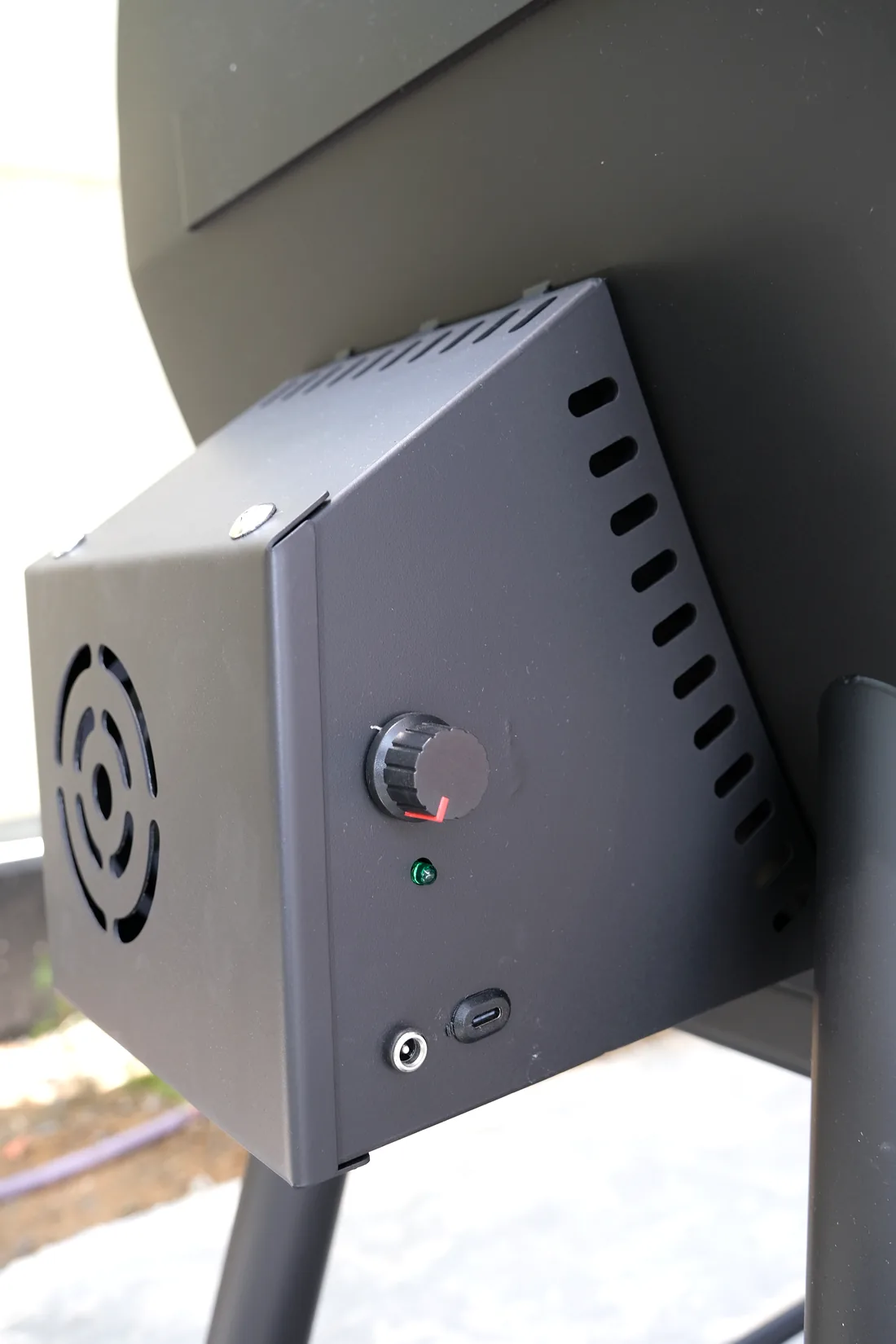
Side Fan Box blows air into the center gap, keeping both charcoal beds glowing evenly. Turn the knob to adjust the flame — no hand-fanning needed.

✨

304 Stainless Steel

Charcoal channels, cooking grates, drip tray, and the underside of the lid are all 304 stainless steel — they handle hot fat, clean easily, and don't rust like regular steel.

🌡️

Smoke Stack & Thermometer

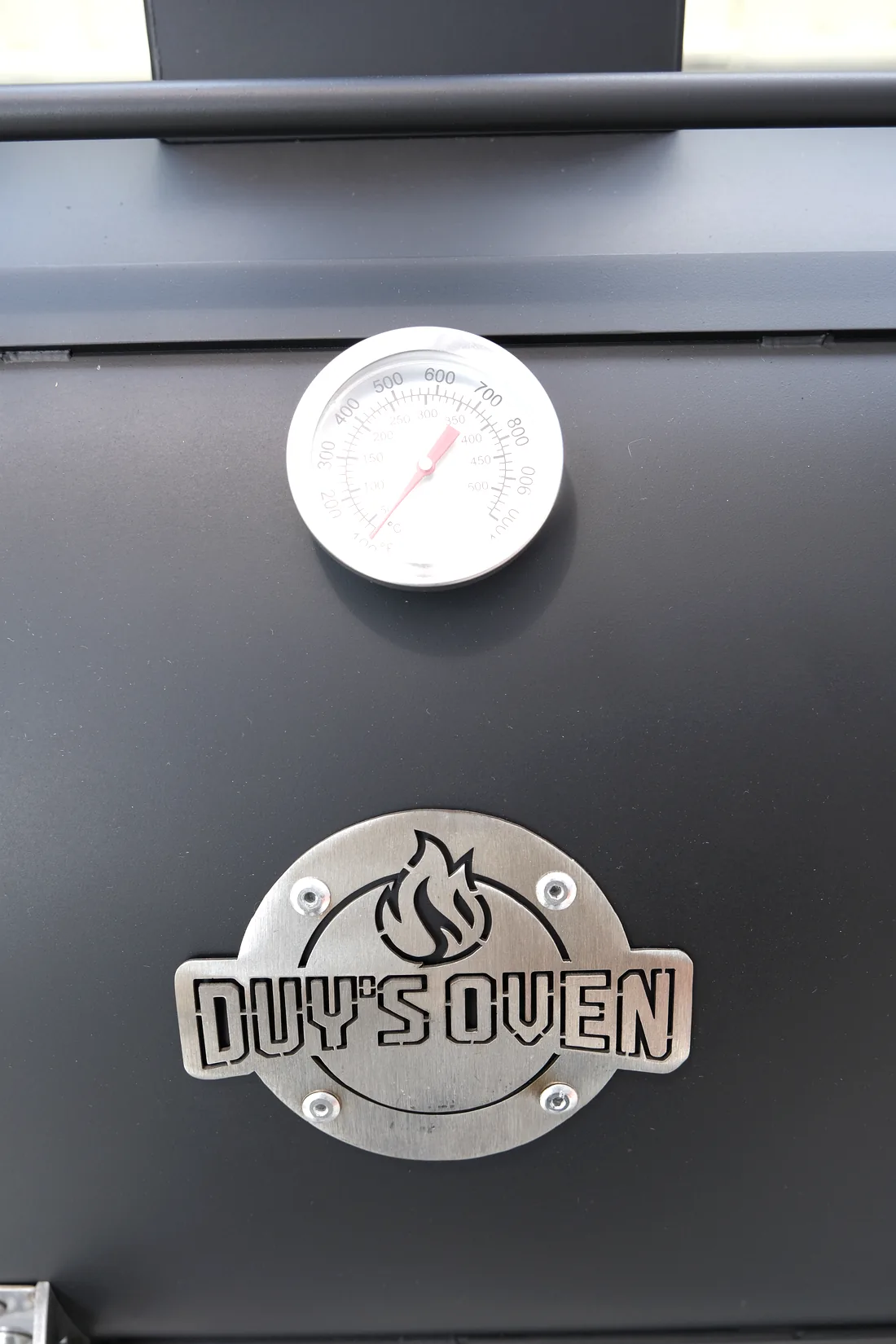
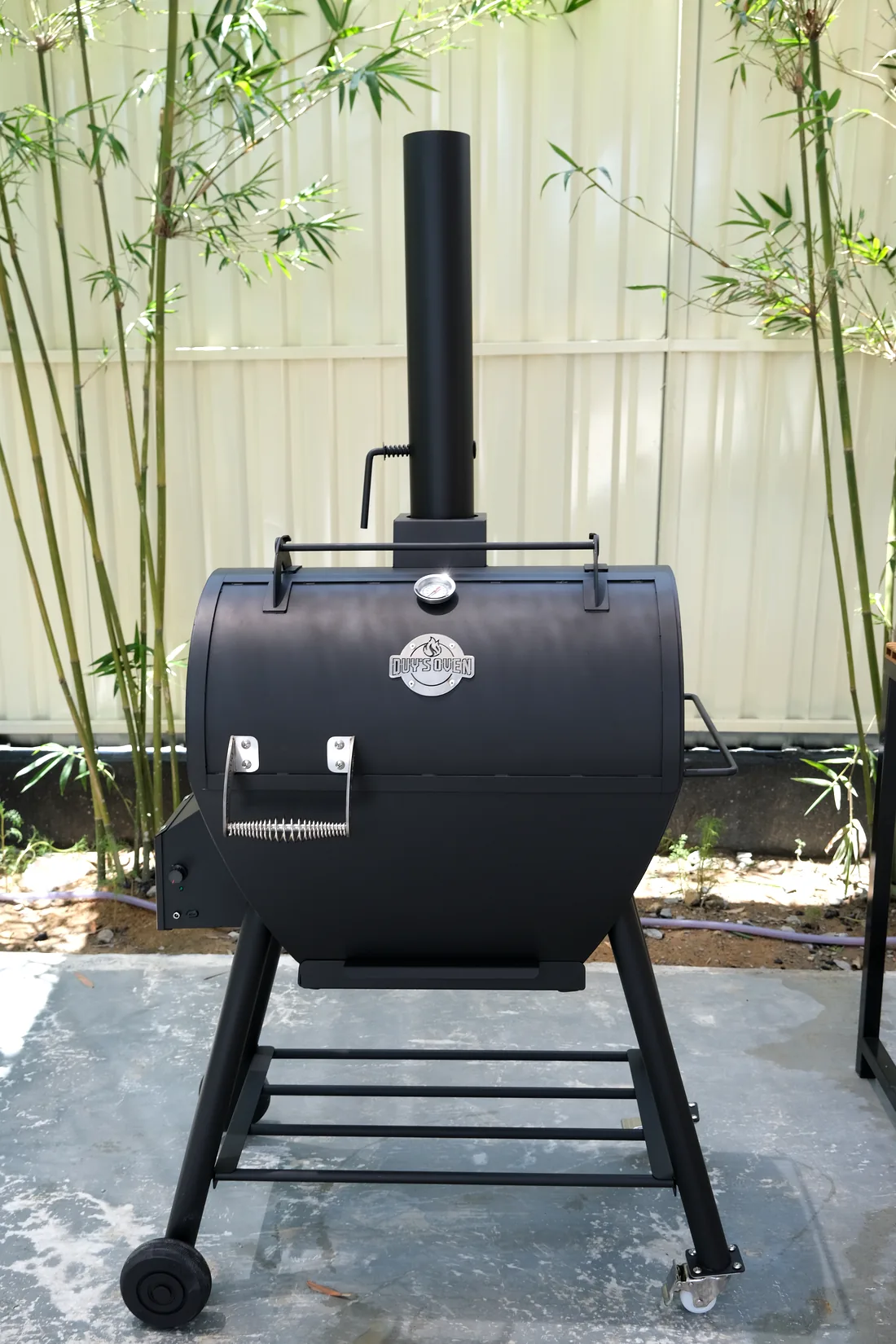
The vertical smoke stack draws smoke up and away from the cook's face; the thermometer on the lid shows the grill's internal temperature.

🛒

Wheeled Base · Lower Shelf

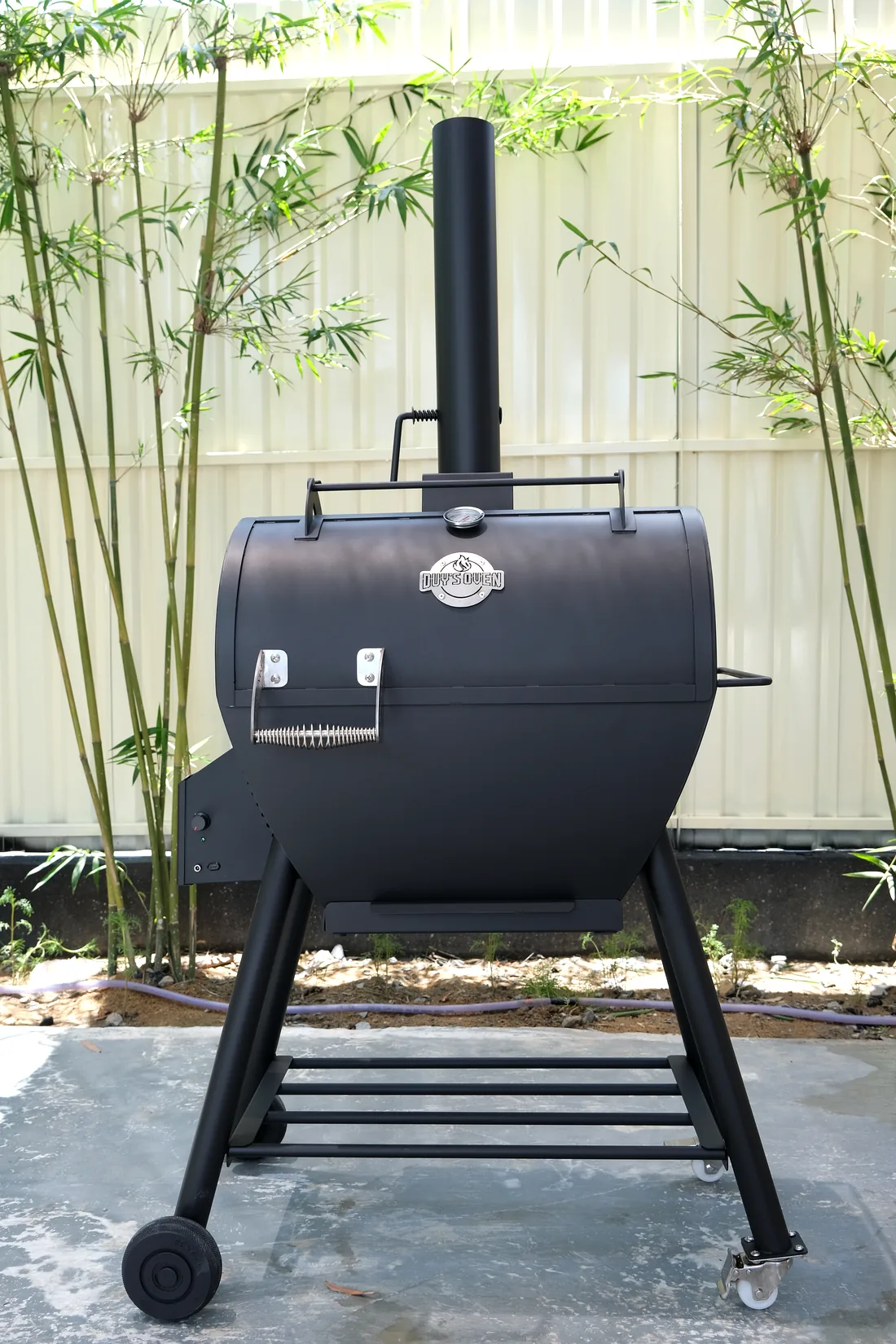
The stand has wheels to move it around the yard, and a lower shelf holds charcoal, tools, and trays — you can set up and break down solo.

Video · Duy walks you through it

The black-painted Inox 304 version, part by part

Duy takes it apart piece by piece: the two stainless charcoal boxes, the stainless cover over the air throat, the ash tray, the chimney damper, the stainless side table over the fan box, the Type-C port and which charging cable to use.

Burning charcoal still produces CO: only grill in a well-ventilated place.

Test run

Watch the Fat Drop

Pull the fan blade to see both charcoal beds glow red, heat travel horizontally through the center, and fat droplets fall straight into the center channel — never through the charcoal.

Science

Why Blocking Fat from Charcoal Matters

This isn't a sales gimmick. The U.S. National Cancer Institute (NCI) explains it plainly: PAH is created when fat and meat juices drip onto a hot surface or into flames, creating flare-ups and smoke; that smoke carries PAH that deposits back onto the meat's surface. In other words, the main culprit isn't the charcoal — it's the fat droplet landing on it.

48–89%Total PAH4 reduction when fat drips are blocked (Lee JG et al., 2016)
41–74%drop in total PAH4 when smoke-reducing keeps the smoke off the meat (Lee JG et al., 2016)
>200°Cthreshold where fat begins thermal decomposition producing PAH, most intense in the 500–900°C range

The Most Reliable Number

Lee JG's team (Korea Food and Drug Safety Authority) published Food Chemistry a 2016 study comparing many charcoal-grilling methods. Their conclusion: the most important factor creating PAH is smoke rising from fat droplets.

A 2016 Korean study on charcoal-grilled pork and beef found that catching the fat cut the total of 4 PAHs by 48 to 89%, while removing the smoke cut it by 41 to 74%, compared with ordinary grilling.

Lee JG et al. (2016). Food Chemistry 199:632-638. PMID 26776018.

Benzo[a]pyrene, one of the 4 PAHs measured in this study, is a substance IARC classifies as Group 1 in Monograph Vol. 100F (2012). To be clear: IARC explicitly states there is no specific epidemiological data in humans for this substance alone; classification is based on animal experiments and mechanism — so no one should claim "proven in humans."

The cook is also exposed

Not just the meat. Measurements in charcoal BBQ restaurants in Hong Kong showed fine particulate matter PM2.5 reaching 1.167 µg/m³. A Portuguese study tracking 18 grill workers across six cities found PAH metabolites in urine increased 9-fold after a work shift. A vertical chimney and a mechanism that prevents fat from touching the coals are two things that help reduce the smoke blown directly into the cook's face.

And this is the part we don't hide

Blocking fat cannot addresses HCA — a group of compounds formed directly in the meat from high heat, originating from creatine, amino acids and sugars, not from smoke. To reduce HCA you must lower surface temperature and shorten cooking time: the same piece of meat at 150°C for 15 minutes yields about 5.89 ng/g, but at 230°C for 15 minutes jumps to about 675.9 ng/g.

And there are also studies that found no difference: Sumer & Oz (2023, Foods 12(7):1374) compared several cooking methods and cannot found no statistically significant difference in total PAH4/PAH8 (p>0.05). Science hasn't spoken with one voice yet, and we think you should know that.

One thing remains certain: when fat drips onto red-hot coals it smokes — anyone tending a grill sees that with their own eyes. This oven was built so that fat drips into a tray instead of into the fire. Read the full analytical article with 16 sources.
The Difference

Standard and 304 stainless steel versions

The principle, size, and operation are identical. Only the material differs — and that difference shows after a few months of use.

Standard version

  • · Heat-resistant painted steel, more affordable
  • · Good enough for home use, a few times on weekends
  • · Aggressive scrubbing over time can chip the paint
  • · In salty, humid areas requires drying and careful weather protection

304 Stainless Steel version

  • ✓ 304 stainless resists hot grease, scrub and wash freely
  • ✓ Ideal for restaurants running multiple shifts, daily washing
  • ✓ Color stays true, no paint chipping over time
  • ✓ Coastal and salty, humid areas — much greater peace of mind
Where to place it

Backyard or rooftop

65L Smoke-Reducing Grill in 304 stainless steel at a family backyard party
Backyard — weekend grilling
65L Smoke-Reducing Grill in 304 stainless steel on an apartment rooftop at sunset
Rooftop — city lights dining
Real product

Component shots taken at the workshop

Direct shot of the oven fresh from production — close inspection of both charcoal chambers, drip tray and welds.

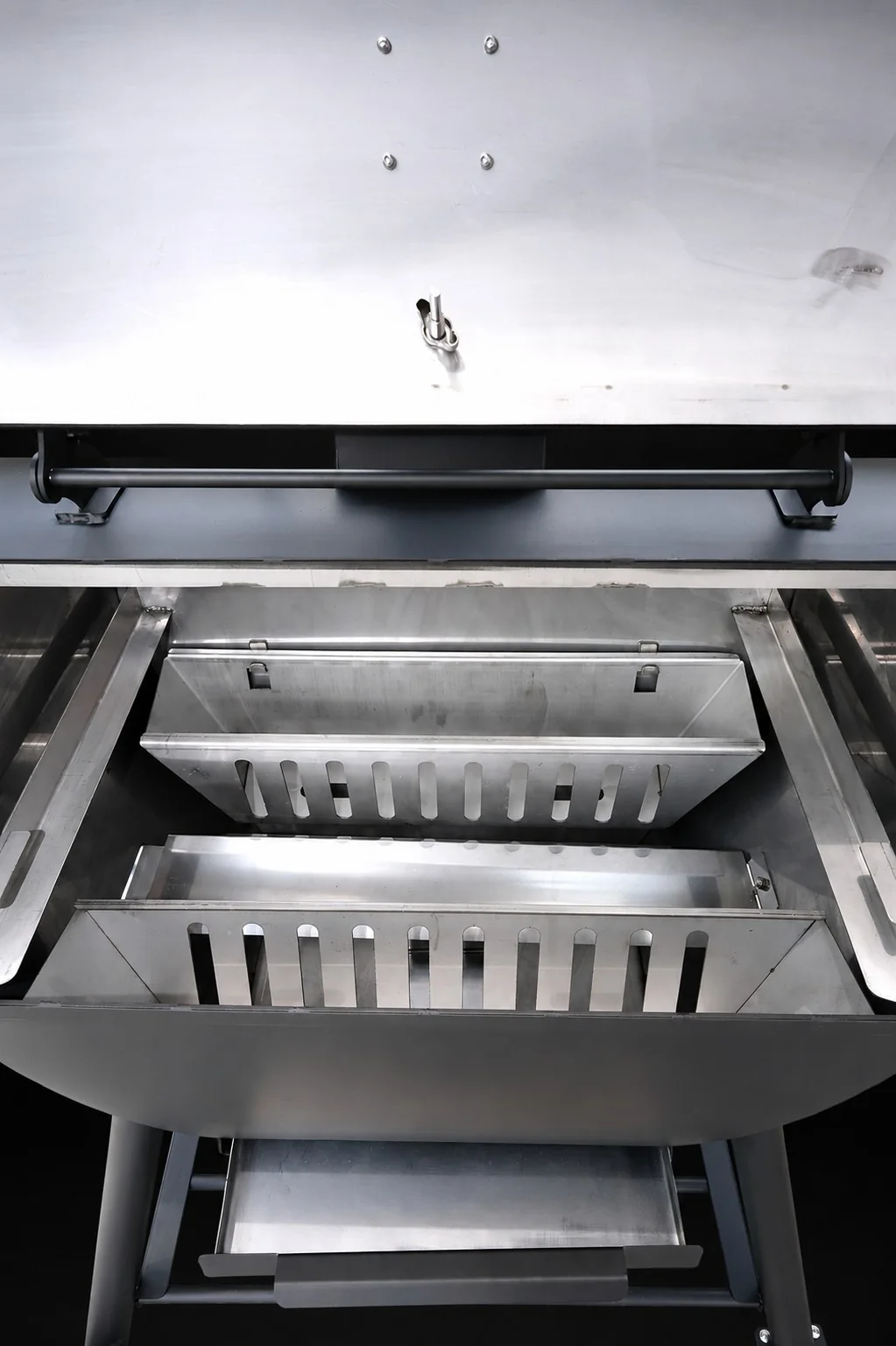
Two lengthwise stainless steel charcoal boxes with ventilation slots
Two charcoal chambers along the sides · ventilation gap
Lid open, showing the grate and the two charcoal boxes
Open lid — grill grate in the center
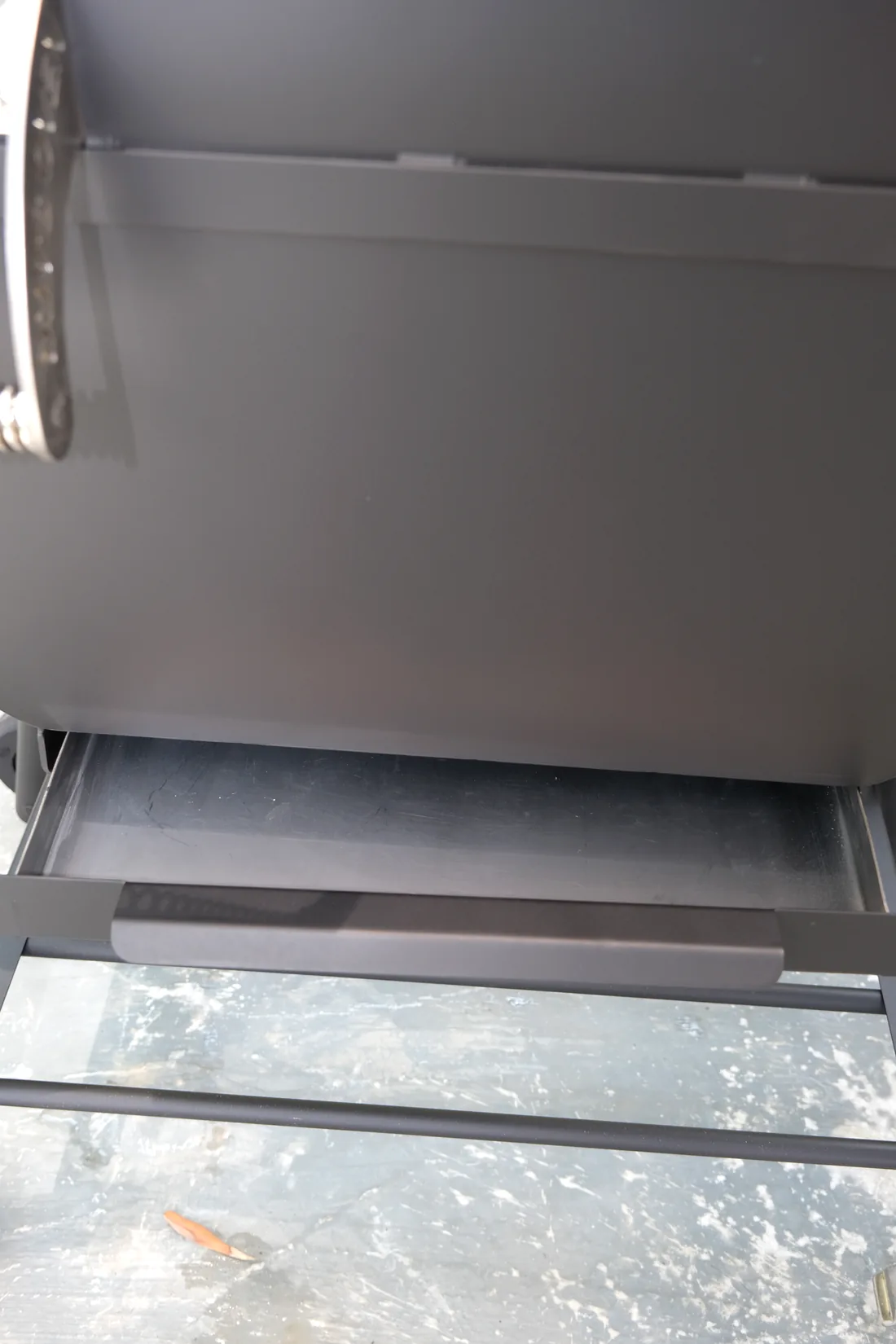
The grease tray sitting beneath the center channel
Drip tray in the center gap
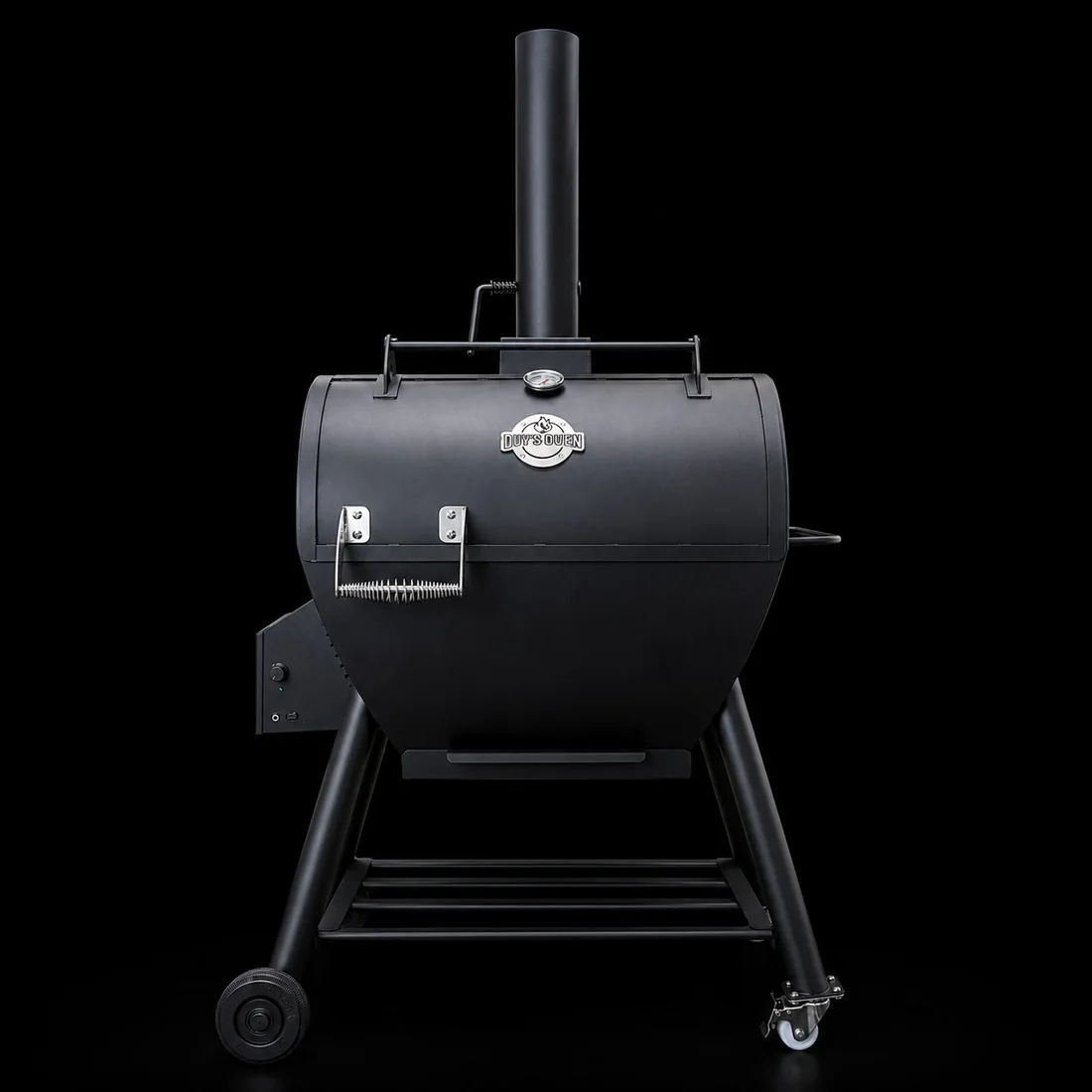
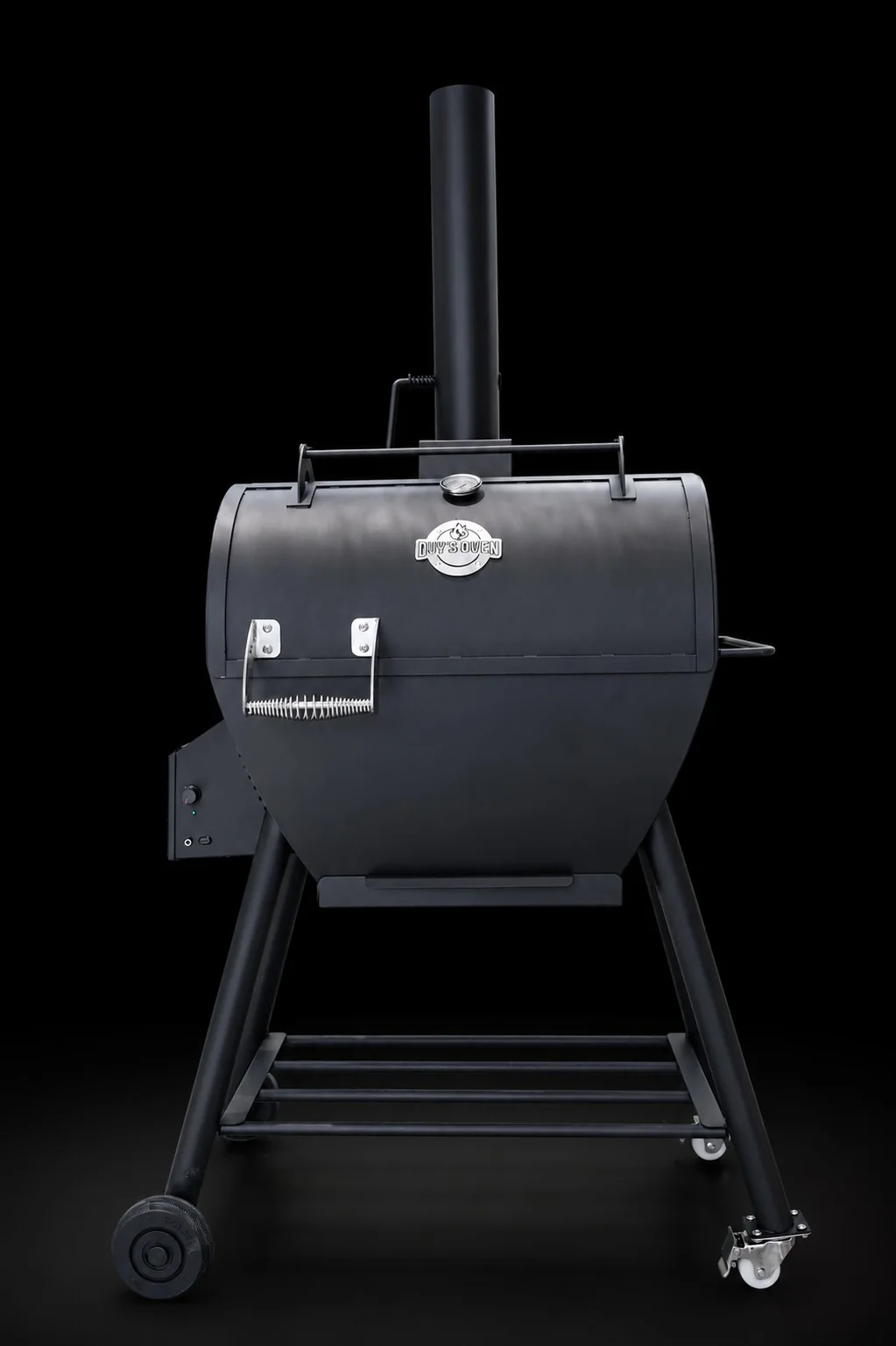
65L Smoke-Reducing Grill in 304 stainless steel, studio shot on black
Studio — full view, black background
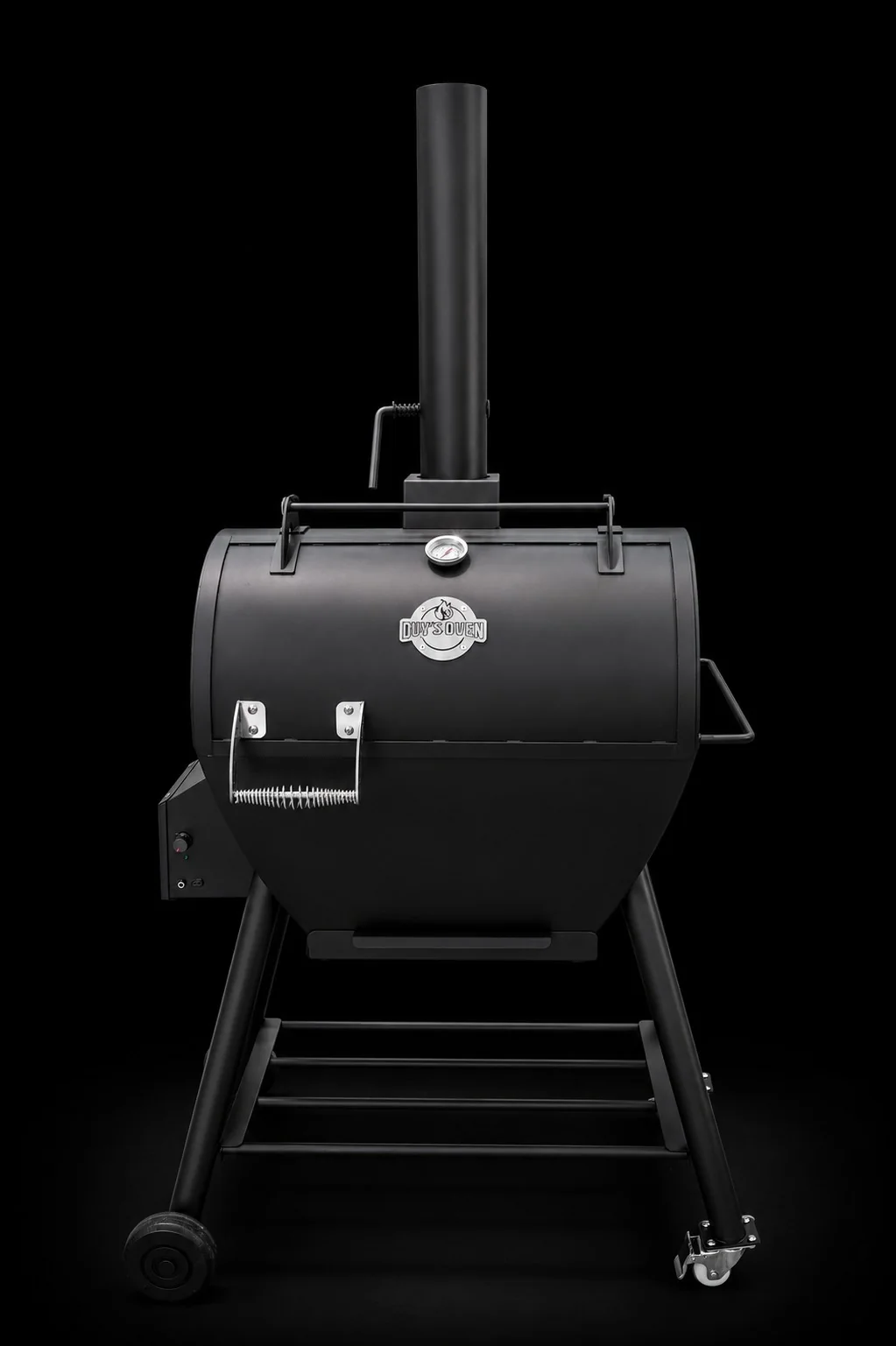
65L Smoke-Reducing Grill in 304 stainless steel, front view
Front view — barrel body, vertical smokestack
65L Smoke-Reducing Grill in 304 stainless steel, 3/4 angle view
3/4 angle — stand legs and lower shelf
The thermometer and Duy's Oven badge on the lid
Thermometer on lid
The air-supply fan control box on the side of the grill
Air blower box on the side
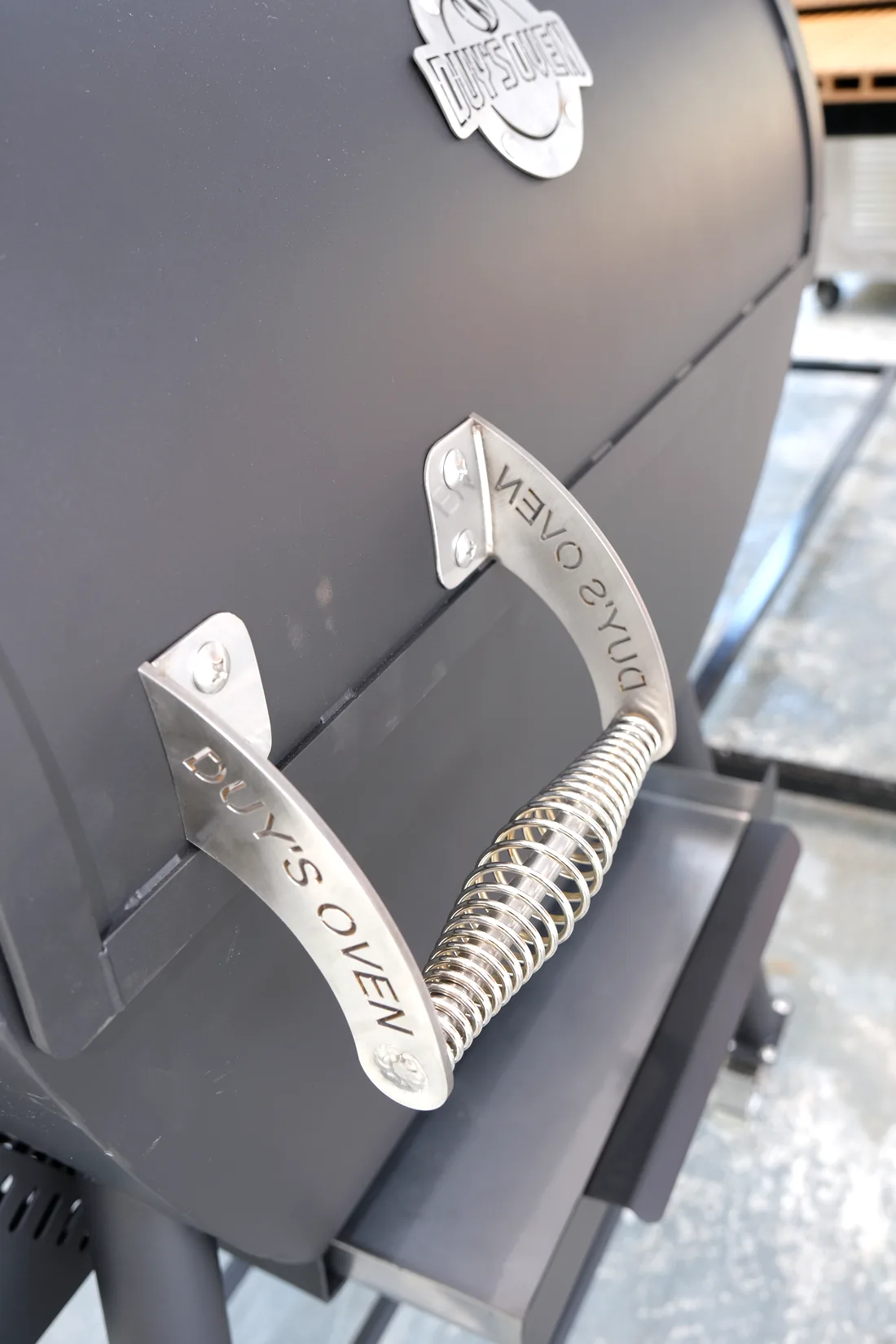
The spring handle and the lid hinge
Spring handles · lid hinges
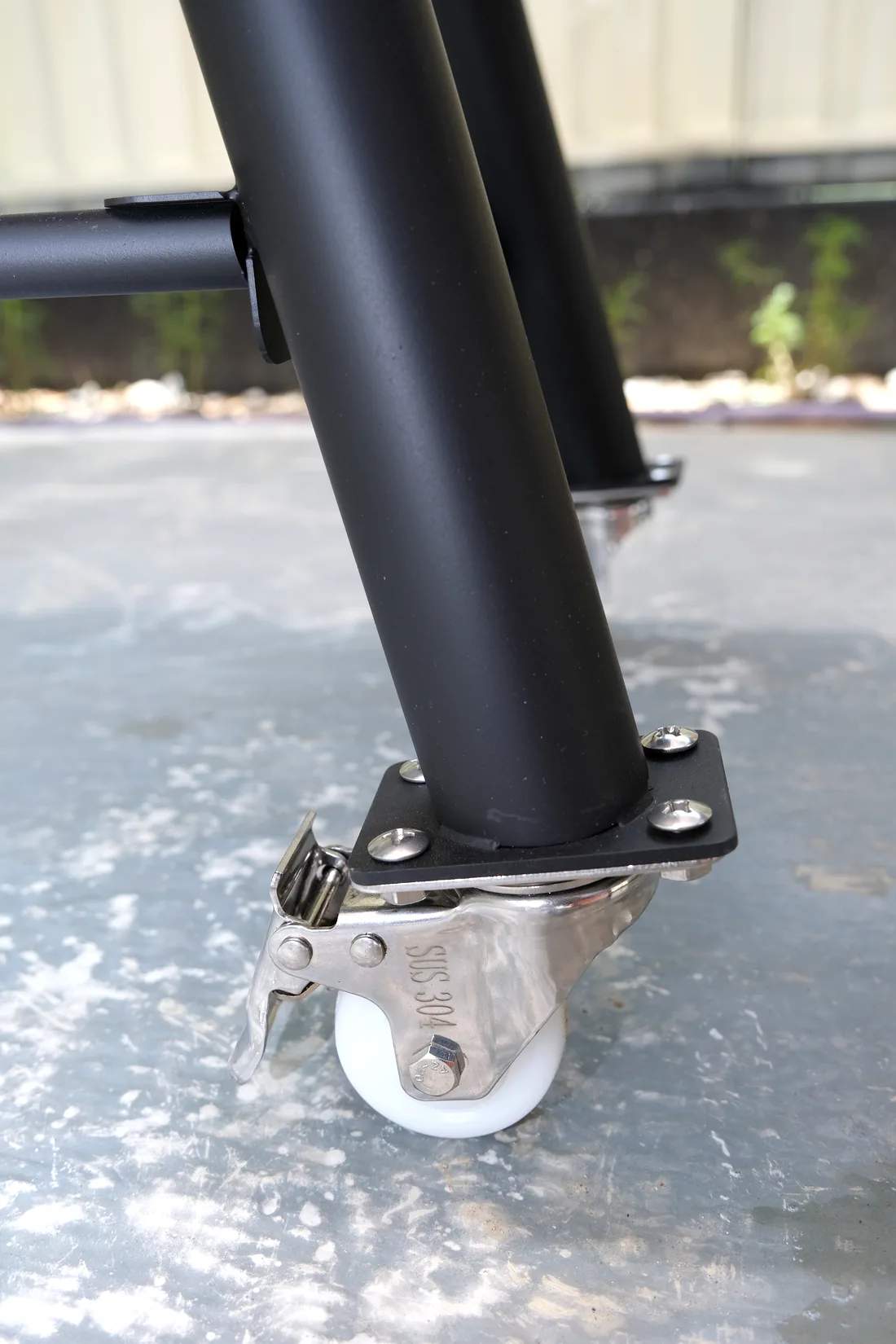
The stand and wheels of the grill
Stand legs · caster wheels
How to Use

One standard batch — and why it tastes so good

The same 6-step process the workshop still uses, common to the whole line of smoke-reducing grills with two charcoal boxes.

🔥

1 · Light & Wait for Charcoal

Pour starter fluid into the bottom of both vertical charcoal chambers (back chamber full, front chamber 1/2), light it, turn on the fan. In about 15 minutes the charcoal will glow evenly.

🍗

2 · Load Batch & Cover Lid

Once the thermometer reaches 180–200°C, place the food in the middle of the grate, right between the two charcoal boxes, close the lid, and turn it once every 15–20 minutes. A 2–3 kg batch cooks through in about 45 minutes.

🌀

3 · Adjust Heat with Fan

Over 250°C — reduce fan speed. Not hot enough — increase fan speed. No need to stir charcoal or open the lid.

The Science of Great Flavor

From 140°C, the Maillard reaction begins to build the browned crust and the layer of umami — the grill's 180–250°C thermometer range sits entirely within that band. And acrid smoke? A study in Food Chemistry (2016) measured it: keeping fat from dripping onto the charcoal reduces PAH4 in grilling smoke by 48–89% — exactly what the channel between the grill's two charcoal boxes does.

Read the full sourced analysis →
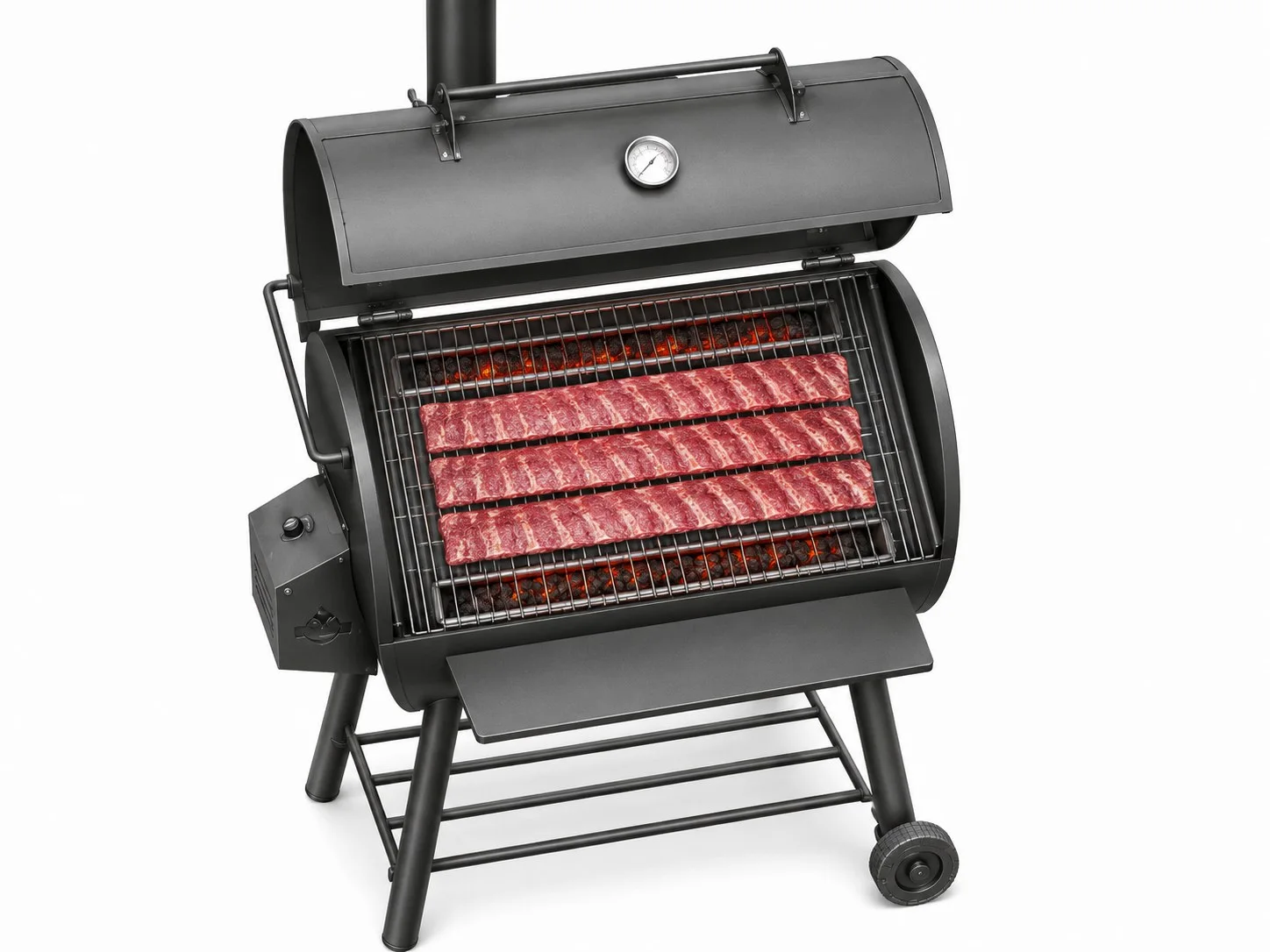
A batch of pork ribs on the grate, glowing charcoal boxes along the front and back edges below
A pork ribs batch — food positioned in center, two charcoal chambers glowing red below at front and back edges
Detailed user guide (65L · 80L · 125L) →
Specifications

Specifications

ModelSmoke-Reducing Grill 65L — 304 INOX Edition
Capacity65 liters
Materials304 Stainless Steel (charcoal chambers, grill grate, drip tray, inner lid surface)
PrincipleTwo charcoal chambers running along front and back edges · food rests in center · fat drips into center gap
Air supplyAdjustable air blower, directs air between the two charcoal chambers
Chimney PipeVertical smokestack, draws smoke upward
ThermometerYes, mounted on the oven lid
Base standStand with caster wheels, storage shelf below
FuelCharcoal
Price17.600.000₫ 10% VAT included
Ideal forFamily · backyard · rooftop · small restaurant

Same mechanism, one level more durable

Made at our HCMC workshop. Contact us for consultation on standard or 304 stainless steel version.

Contact us now — 0901 691 717 Chat on Zalo