Thick steel, Texas style, real smoke
One oven, one cooking philosophy
In Texas, people say: "Good meat isn't about cooking fast, it's about cooking right." A stubborn brisket needs twelve hours of oak smoke before it softens like butter. That's not impatience — that's respect for the ingredient.
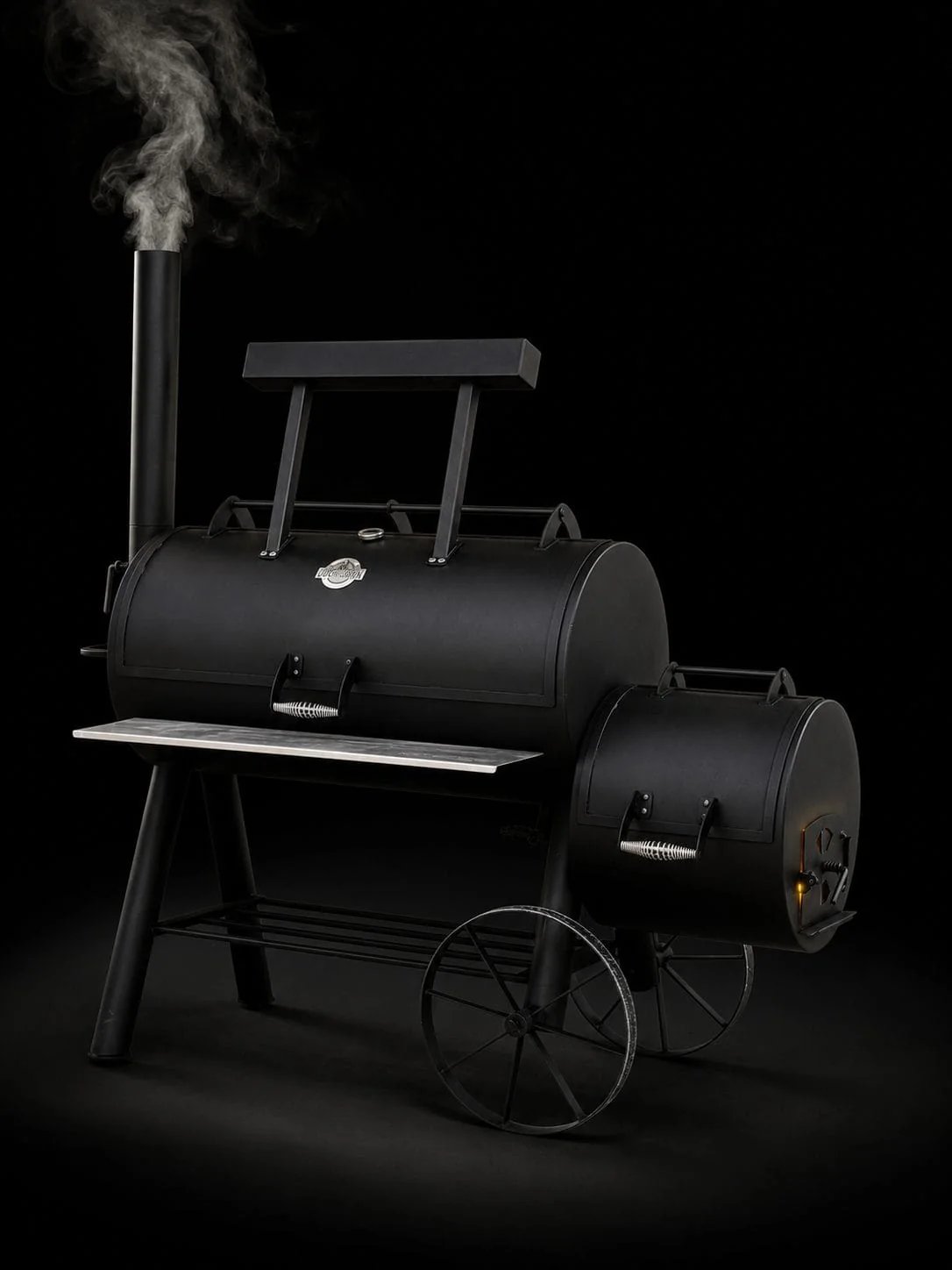
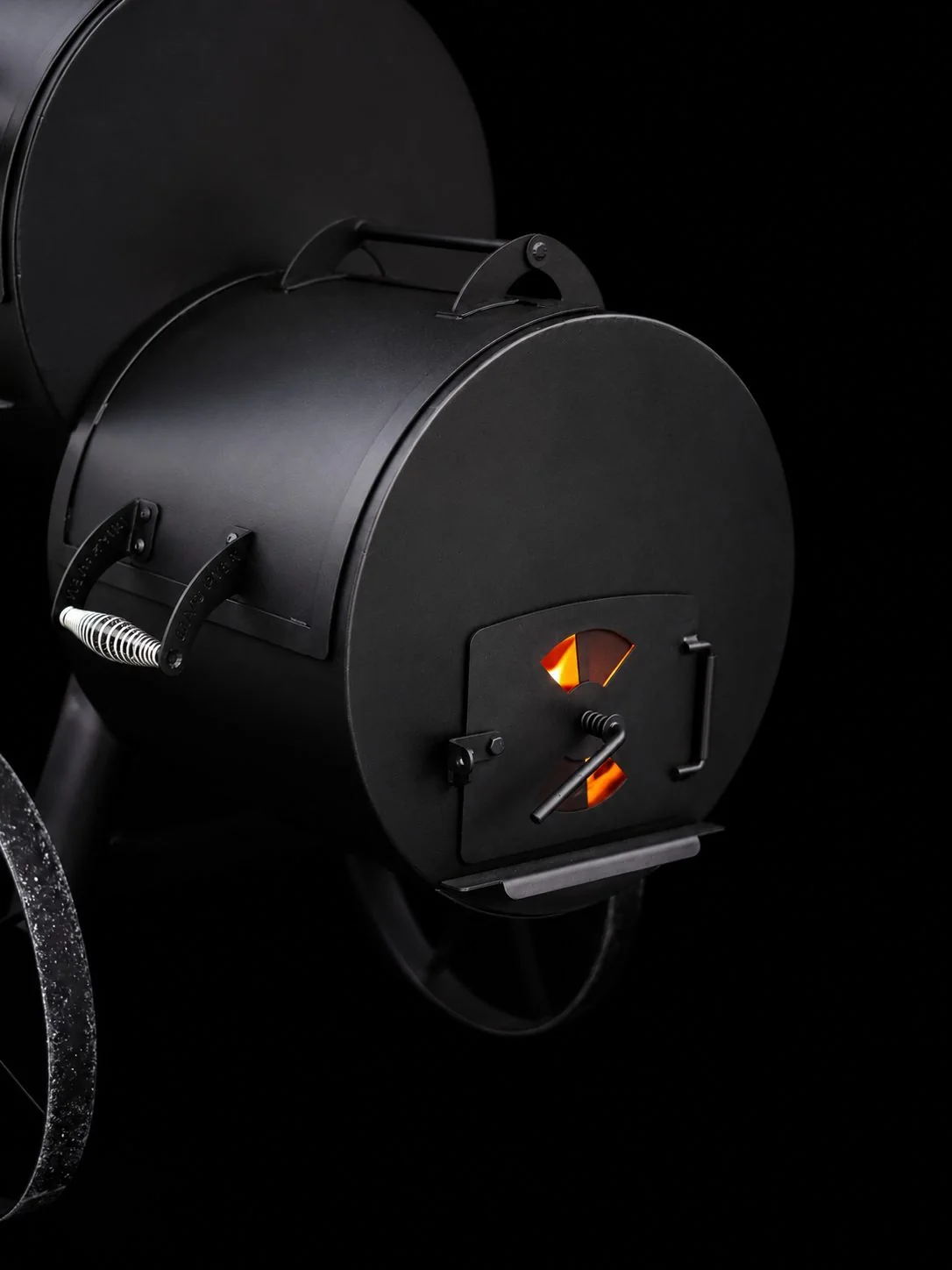
Duy's Oven was born to bring that philosophy to Vietnam: an oven offset smoker with thick steel, a separate firebox and cooking chamber, so smoke and heat take a long journey before touching the meat. Hot air, no open flame — just fragrant smoke wrapping everything.
Every oven is handcrafted, calibrated to maintain steady heat through long cooking sessions, suited to both imported oak and Western charcoal.
Built for real smoke
Not a gas stove with fake smoke, not an electric pot. This is a true wood-burning oven — where smoke flavor seeps into every fiber of meat.
Separate firebox
Fire burns in its own chamber, only smoke and hot air enter the meat chamber. Less charring, less acrid taste — true offset principle.
Steady heat retention
100kg thick steel absorbs heat like a flywheel — chamber temperature stays steady between 110–135°C for hours without constant adjustment.
Two tiers, endless versatility
Lower rack 94×47cm for large cuts, upper rack 94×34cm for fish and vegetables. One cook yields multiple dishes with different heat zones.
Smoke takes the long route
The secret of an offset oven lies in smoke's journey: from the firebox, through the meat chamber, then out the smoke stack — completely enveloping the meat in convection heat.
Burn & generate smoke
Oak wood burns on a charcoal base in the firebox on the side, producing hot air and aromatic smoke. An air damper regulates oxygen flow.
Convection through the meat
Hot air is drawn into the cooking chamber, flowing across the grill grates. Meat cooks from the surrounding hot air, not from direct flame.
Exit through the chimney
Old smoke rises through the tall chimney, pulling in fresh air flow — creating natural convection that keeps the oven constantly 'breathing'.
Oak for aroma, Vietnamese charcoal for foundation
Two fuels, two roles. The right ratio is the key to clean smoke and stable heat.
Oak wood
Texas BBQ's signature wood. Burns rich, with neutral and clean smoke — strong enough for beef, not as harsh as hickory. Each piece ~33cm fits perfectly in the firebox, producing 'thin blue smoke' — pale smoke is the mark of clean smoking.
Vietnamese charcoal briquettes
Western charcoal burns long with high, stable heat and minimal smoke — ideal as a heat-holding base between wood additions. Oak placed on the red-hot charcoal lights cleanly, reducing white acrid smoke with bitter notes.
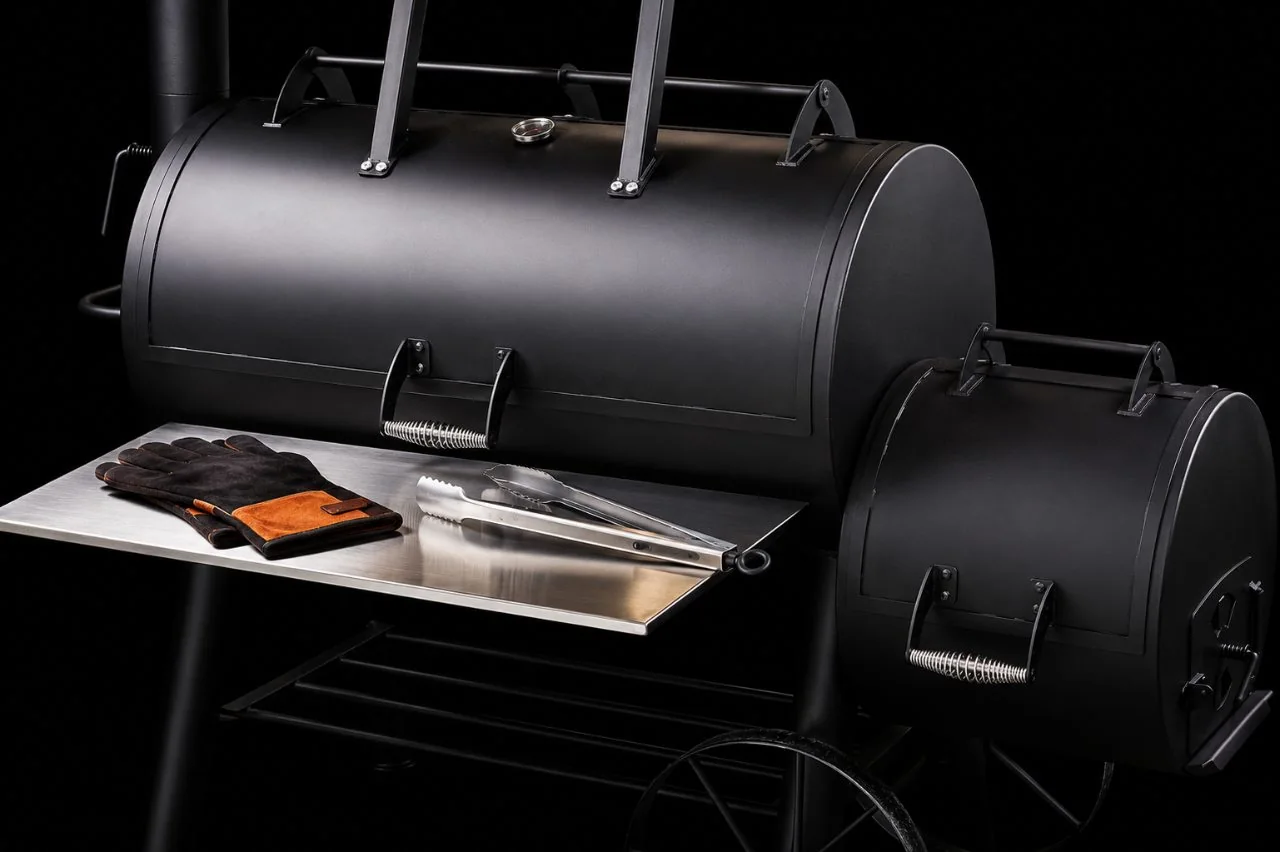
304 stainless steel work surface & insulated chimney
The new Offset 10050 upgrades two components users interact with most.
What happens inside the meat?
Smoking isn't magic — it's a chain of chemical reactions that can be explained. Understand them, and you'll control the results.
What is wood smoke really?
When oak wood heats up on a charcoal base but doesn't burn bright, it goes through a process Pyrolysis — the three main components of wood break down at different temperatures, each producing a distinct flavor group.
Lignin → classic smoke flavor
Lignin (wood's "glue") breaks down at ~350–450°C, creating phenol — the soul of BBQ smoke aroma.
Guaiacol — smoke, smoldering Syringol — characteristic smoke aromaCellulose & hemicellulose → color & sweetness
Break down at ~200–350°C into carbonyl and reducing sugars — contributing to the rich brown color of the bark and subtle sweetness.
Carbonyl — creates color Furan — sweet, caramel"Thin blue smoke" is clean smoke. When wood burns with sufficient oxygen, ultra-fine smoke particles scatter light into a faint blue color. White opaque smoke = larger particles mixed with unburned resin and acid → leaves bitter, acrid taste.
Four reactions that shape your meat
Over many hours at low temperature, your meat transforms according to core temperature — each temperature milestone unlocks a reaction. This is why "low & slow" cannot be rushed.
① Collagen → gelatin (key to tenderness)
Tough connective tissue (collagen) hydrolyzes into gelatin from ~65°C and above, but requires time. Gelatin retains water, creating a "buttery soft" sensation, juicy. Reaches perfect tenderness ~90–96°C core.
② Smoke ring
Gas NO from smoke penetrating the moist meat surface, binding with myoglobin to form heat-stable pink pigment. The smoke ring stops growing when core exceeds ~60°C — it's purely an aesthetic indicator, not a flavor contributor.
③ Maillard → bark (crust)
On the hot surface ~140°C, amino acids + reducing sugars react to create dark brown crust and hundreds of aromatic compounds. Combined with phenol smoke and spices, this is the famous "bark" layer.
④ Fat rendering
Fat distributed through muscle fibers melts gradually, naturally "basting" the meat, making it glossy and rich from within.
Why does our brain crave smoke so much?
The magic of smoked meat is the harmony of many layers of sensory stimulation happening all at once — something no quick cooking method can recreate.
Smoke layer — phenol compounds deep-set
Guaiacol and syringol cling to fat layers and moist surfaces, penetrating the first few millimeters of meat — creating a smoke flavor that lingers long on the palate.
Taste layer — umami explosion
Maillard and protein breakdown over many hours release glutamate and nucleotides — that's rich umami flavor, "meat's natural sweetness".
Texture layer — perfect contrast
Crispy, slightly chewy bark on the outside; inside, tender meat fibers with gelatin that melts in your mouth. This contrast makes every bite more interesting.
The "smoke = safety & satisfaction" effect. Smoke aroma connects to ancestral memory of fire and cooked food — part of why BBQ smoke feels comforting.
Nutrition — and smart eating
Low & slow smoked meat retains plenty of nutritional value, but understanding both benefits and considerations helps you enjoy it sustainably.
The positives
Complete protein abundant for muscle. Gelatin (from collagen) rich in glycine, proline — good for joints, skin, gut health. Slow cooking causes most excess fat to render away, lighter than frying. Texas-style seasoning uses just salt and pepper — no sugar, no additives.
Worth noting
Smoke contains certain compounds PAH (aromatic hydrocarbons) and charred surface HCA — not beneficial if consumed in excess. Salt content in the crust is also significant.
Eat well & healthily: maintain "thin blue smoke" (clean smoke with less PAH), cook low temperature (low & slow produces less HCA than high heat grilling), trim off excess charring and treat BBQ as a delicacy — not daily food.
* Reference figures, vary by cut & lean/fat ratio.
One oven, two standards: American & European
With the same offset oven — you can cook Texas American style (hot smoke, many hours) and European style (cold/warm smoking to preserve texture and keep). Below are both methods.
Texas low & slow — six steps of a pitmaster
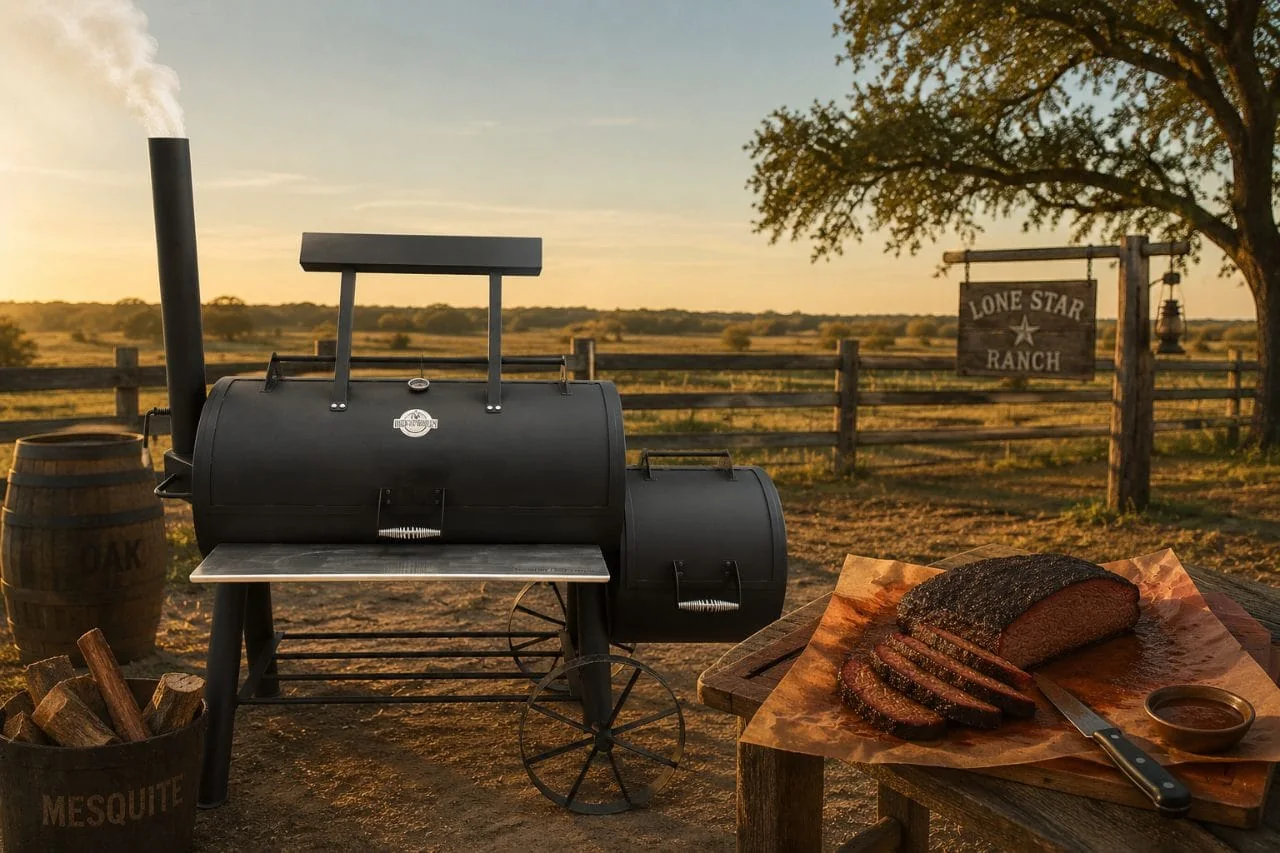
American smoking tradition uses hot smoke at 107–135°C for many hours: collagen melts into gelatin, smoke ring (bark) deepens, pink smoke ring forms. Salt, pepper, oak smoke and time.
Simple "Dalmatian rub" marinade
The legendary Central Texas formula: kosher salt and freshly cracked black pepper, 1:1 ratio. Apply evenly all over the meat, let it rest at room temperature ~45 minutes before placing in the oven so the seasoning adheres better.
Kosher saltFreshly cracked black pepper1:1 ratioBuild charcoal base, oak kindling
Heap ~4kg charcoal until glowing evenly (absolutely no lighter fluid or oil — will create off-flavors). Open air vents to 100% initially, place 2 oak logs on the charcoal base. Wait for the oven to reach and stabilize at 110–135°C before adding the meat.
Charcoal base 4kgAir vents 100% during startupHunt for "thin blue smoke"
This is the most critical skill. Smoke must be thin and slightly blue, almost invisible — that's clean smoke. Thick white smoke rolling means insufficient oxygen, which creates bitter flavors. Add oak one log at a time (~every 45–60 minutes), when charcoal is still glowing. Control temperature via the firebox air vent, keeping the chimney fully open.
Thin blue smokeAdd 1 log per sessionChimney open 100%Stay patient through the temperature plateau
Around 68–77°C internal, the meat temperature will stall for hours — that's "the stall", caused by surface evaporation cooling. Don't panic, don't crank the heat. You can wait it out, or use the "Texas crutch": wrap the meat in butcher paper to push through the stall faster, though the bark will be slightly softer.
Stall ~68–77°CWrap in butcher paper (optional)Cook by internal temperature, not by the clock
Time is only an estimate — internal temperature decides everything. Brisket "butter-tender" at ~96°C; beef ribs ~93°C; pork ribs ~91°C. Use a meat thermometer inserted into the thickest part. Final test: a skewer pierces through with no resistance.
Brisket 96°CBeef ribs 93°CPork ribs 91°CDon't rush — let the meat rest
The most underrated step, but it determines juiciness. Remove the meat, wrap loosely and rest for 30–60 minutes (large cuts may take longer). The muscle fibers will relax and reabsorb moisture. Slice against the grain, and you'll see the pink smoke ring distinctive beneath the dark crust — the medal of a perfect smoke session.
Rest 30–60 minutesSlice against the grainCold & hot smoking — the classic European way
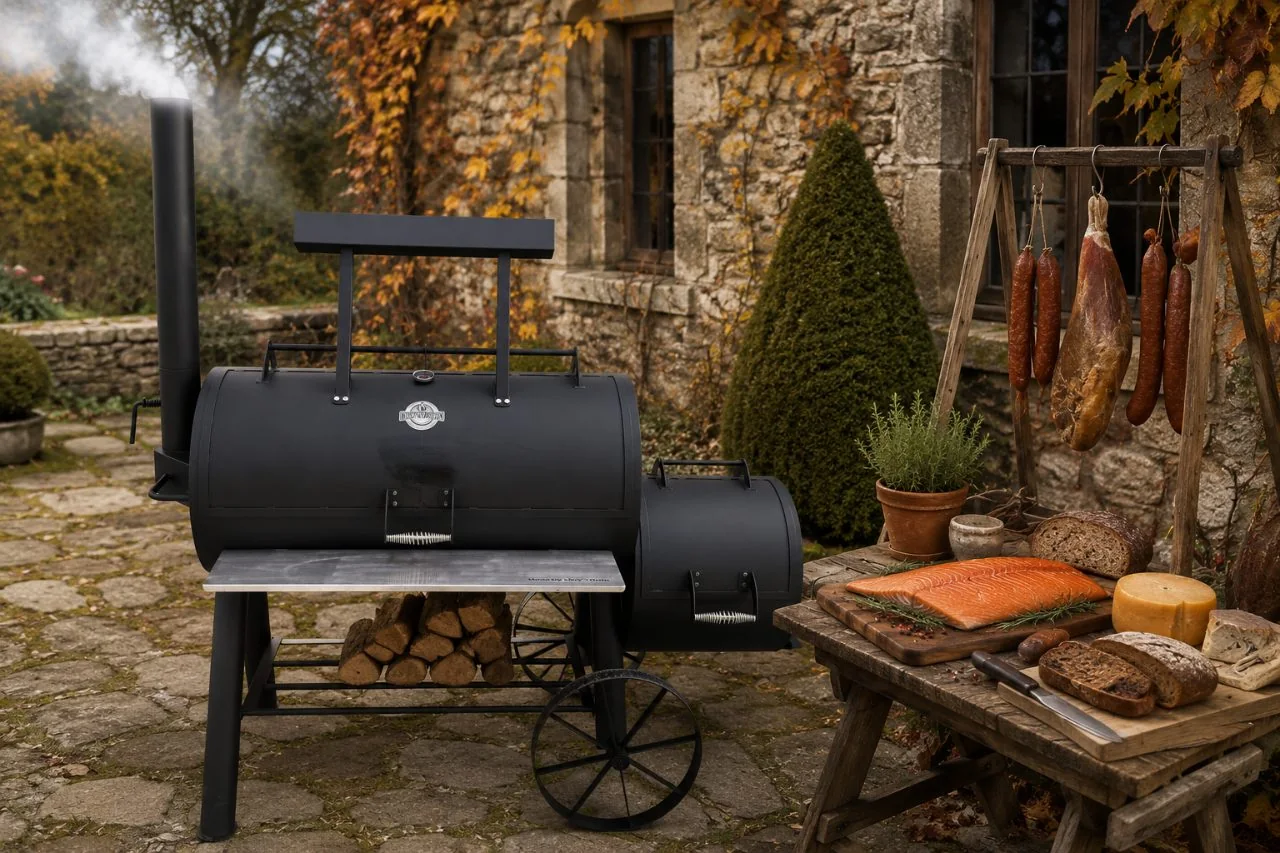
European tradition was born for preservation: cure first, smoke low and slow for hours to days. Salmon, sausage, jamón, cheese — silky texture, clean smoke flavor.
Curing — salt before smoking
Rub dry salt or brine at 3–5% (add a touch of sugar for salmon). Salt draws out moisture, firms the meat, and deepens flavor — essential to the European method, both for taste and preservation.
Dry salt / brineSalmon + touch of sugarForm the pellicle
Rinse gently, pat dry, then air-dry in a ventilated spot for 1–4 hours until the surface firms into a thin, slightly sticky pellicle — this layer holds smoke evenly and develops beautiful color.
1–4 hoursTacky surfaceThree European temperature ranges
Cold smoke 15–30°C: salmon, cheese, ham — smoke doesn't cook, preserves tender texture. Warm smoke 30–60°C: German-style sausage. Light hot smoke 60–85°C: mackerel, chicken — cooked through yet juicy. Oven maintains low stable temperature thanks to separated combustion chamber, air valve and insulated chimney.
Cold 15–30°CWarm 30–60°CLight hot 60–85°CBeech, oak — fine, even, long-lasting smoke
Europe favors beech and oak: light, sweet, mild smoke. Burn gently for continuous fine smoke — cold salmon needs 6–12 hours, traditional ham can be smoked repeatedly over days.
Beech / oak6–12 hours (salmon)Rest and age — flavor matures gradually
After smoking, hang in a cool airy place so smoke flavor deepens and mellows. Sausage, ham age better the longer they rest — taste becomes fuller. 304 stainless prep table is the hygienic processing and packaging station.
Hang in airy space304 stainless prepUSA vs Europe — which style?
| Criteria | 🇺🇸 American standard (Texas) | 🇪🇺 European standard |
|---|---|---|
| Chamber temperature | 107–135°C (hot smoke) | 15–85°C (cold → light hot) |
| Time | 6–18 hours per batch | A few hours to several days (multiple smoking sessions) |
| Signature Dishes | Brisket, ribs, pulled pork | Salmon, sausage, ham, cheese |
| Seasonings | Salt + pepper (Dalmatian rub) | Pre-cure/brine, herbs |
| Wood | Oak, mesquite, hickory | Beech, oak |
| Results | Dark bark, pink smoke ring, tender | Smooth texture, clean flavor, long-lasting |
Both styles run on the same oven — the difference is in fire intensity, air vents, and time.
Temperature & time chart by meat type
Standard Texas figures for Duy's Oven, using oak wood. Times are estimates — always cook to actual measured internal temperature.
| Meat type | Chamber temperature | Internal temperature | Time | Notes |
|---|---|---|---|---|
| Brisket | 121°C | 96°C | ~12 hours | Wrap in paper at 74°C internal |
| Beef short ribs | 135°C | 93°C | ~8 hours | Texas style typically unwrapped |
| Pork spare ribs | 121°C | 91°C | ~6 hours | Classic 3-2-1 method |
| Salmon (hot smoke) | 95°C | 60°C | ~3 hours | Pull at 60°C internal |
| Whole duck | 135°C | 77°C | ~5 hours | Score skin for fat rendering |
Want to experiment with combinations? Open the interactive simulator to see how smoke, temperature, and meat color change over time.
Learn to operate the oven in 10 minutes
Interactive Duy's Oven simulator lets you adjust air vents, wood amount, and meat placement — then watch smoke rise, heat build, and meat change color hour by hour, with guided narration.
Open interactive simulator →